Back in my student days, I used to make these surrealist movies (I did say I liked surrealism). Mostly they were short, like 3-6 minutes. I had to make at least 6 per semester, but there were no other requirements, no assignments, no specific hoops to fly through. But if I start the story there, I'm getting ahead of myself.
The first video I ever made, with a borrowed video camera, contained music I borrowed too. Better to say, music I stole. Jazz, Classical,
Avant-garde Electronica, all blended together with the "live" sound thanks to a borrowed mixer. It was okay. The first version was way too long at 18 minutes, so I had to cut it down to 6 minutes and it was almost watchable at that length, just don't ask me to watch it now, lol.
What I noticed though, was that the music really carried the thing. Take away the stolen melodies and the whole thing would fall flat on it's face. There's a quote which I first heard attributed to Kubrick, but which I've never been able to verify, "Film is 90 percent sound." I keep that quote close because I agree so thoroughly with it. I would also amend it to say, "And film is 80 percent music."
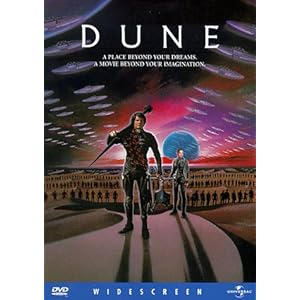
If you have ever seen the 1984 production of Dune, Produced by Dino De Larentis and compare it to the 1980 production of Flash Gordon with the same producer you can kind of see a petri dish of this phenomena. Without getting too far into it, I consider Flash Gordon to be a successful, if flawed movie, and Dune to be a failure, without flaws. I'll go further and say Dune is a much better made movie than Flash Gordon, but Flash Gordon is much more enjoyable to watch. The reason the better film is not as good, in my opinion is in the scores of the two films. Queen's score for Flash Gordon improves a weak film and really drives it forward. Toto's score for Dune brings the film down and wrecks a superior effort.
Recognizing that the strength of my first video relied so heavily on music, music that I didn't produce, I decided, if I was to make any more video, I would have to start producing my own music. So, with no training at all, and no clue, and being kind of tone deaf, I started to make music.
That early stuff is worse than any video I ever made. It's not just unlistenable, it's downright annoying to hear, it grates on the ears. The event I credit most with helping break me out of the terrible musical rut I was in was learning about John Cage's compositional process, casting sticks using the iChing. His process was completely random. It liberated me because it made me believe I couldn't make any mistakes, if random chance could be used to write music, then mistakes were an impossibility. As soon as I wasn't afraid of making mistakes, I got more adventurous and the music I produced became more interesting.
I continued to do my little musical experiments (that's really what they were), and record them to tape. I produced hours and hours of material. On rare occasions, I produced something I liked, and anything I liked would be cataloged on a series of "Master" tapes I began to make. By the end of this way of working, I'd produced three 90 minute "Master" tapes containing music of various lengths, tempos, and moods. I would describe most of it as
Avant-garde Electronica with contemporary classical ambitions. There were a few pop oriented tunes as well, but not many.
The only time I have ever visited a large film production facility, one of the more interesting things to me was the music room, essentially, a room with a sound system and two walls filled with CDs (this was a while ago). The room existed so directors and producers could go find music for their projects. I always wondered how they picked which CDs to include in the room, if it was dependent on some licensing agreement. The only time I tried to arrange legal borrowed music for a video I was producing, the record company sent me a large package of CDs from their second tier artists. Artists who would love to be included in a movie sound track, even for very little money. The exposure is often invaluable to them and hence they are willing to come cheap.

The three "Master" tapes I produced became my "music room" for my videos. Each time I finished editing a new video, I would peruse my music tapes looking for something interesting to include. Very rarely, I would score a specific music work for a specific video. Going back to that first video I made, using "found" music seemed to add depth to the work and I liked that process. The difference was, now the "found" music was music I had produced earlier, at another time and place.
And this gets back to the idea of juxtaposition. Taking music recorded months earlier in a different emotional state, different time, different place and adding it to a just completed video creates a moment of juxtaposition. Similarly, I have taken my own writings from years in the past, poetry and essays from high school, for example, and used them, word for word, to make new things, videos, songs, etc . . . Once I was doing this series of miniature photographs in my apartment. Obviously, I couldn't include a "real" sky, because I was indoors, but I remembered this series of cloud paintings I'd done with pen and ink, years earlier. I scanned those and used them as the "sky" in the miniature photo series. I once wrote a poem, years later, made an art book of the poem, years later, made a video based on the art book, and am now considering using the same poem as lyrics for a song in the retro project. I wouldn't call it a good poem either, but I like it, obviously, since I keep returning to it.
I think it's often the case, that our own creations from the past offer the easiest and most personal means of creating juxtaposition in current work. You could even say, past work is a treasure trove to be mined for value in the present. It enriches and adds depth. It's like working with an independent clone of oneself. All the benefits of "design by committee" with none of the negatives, after all, you can be a dictator over your past self, but I would say you, and more importantly, your work, benefit by being a benevolent dictator in that relationship.
.jpg)