Showing posts with label analog. Show all posts

Wednesday, July 25, 2012

The Challenge of the Challenger


I just recently finished the video for I See You (I am Empty) and the making of the video went very smoothly, for the most part, hence I have very little to write about the experience.  The most obvious problem I had making this video, which was obvious long before I even started, was that the main source was analog audio without a time code.  This was exacerbated by the fact the the video was produced as a videoSong, meaning, the actual recording of the song had to be incorporated into the video.  I didn't stand a chance of getting true sync for this footage.  The sync is okay though, not actually too bad.  I had to incorporate some cuts that weren't part of my original plan, because some of the imagery started to creep out of sync with the audio.  By making a cut, I could re-align the errant images.


Another thing that was not part of my original plan was to make visual references to the lyrics (like when I say "Yugo" you see a Yugo on the screen).  This came about because, after I started cutting away from the performances, I thought the video got a little dull.  My original idea was that you would see each of the four tracks performed in their entirety, to really see how the song was made.  Once I started cutting, I became selective and started cutting away more, to "justify" the necessary cuts and make them look more intentional.

Most of the added imagery was pretty much predictable and workman like, with one exception, the Space Shuttle Challenger.  It was challenging, for sure.


You can actually download footage of the tragedy on NASA's website.  I watched it a few times and considered including it.  But it seems so wrong to me.  I know I included a reference in the song, and that felt genuine, I mean, I remember it, it seems valid to talk about my experience of it.  In contrast, it would be weird if I wrote a song about experiencing the Kennedy Assassination, since I wasn't yet born, unless I was working in some historical fiction context.

In referencing it, I'm still telling my story.  But if I was to use the footage, suddenly, I'm no longer telling my story, I'm telling an American story about people who are not with us anymore.  It stops being about the witness.  And it seems wrong to do that in a song about a guy dating a robot.  And if it's not wrong, it's very distracting, overshadowing the fictional drama I'm writing about with events that actually happened.

Since many of my visual cues are still images, I decided to go that route and the image of the shuttle I chose is not even the Challenger, but the Space Shuttle Atlantis.  And rather than give it an abstract "flight" path like most of the other sprites in the video, I gave the still image of the shuttle a realistic path.  However, at the top of the screen, when the lyrics describe the explosion, the image of the shuttle just fades away and disappears and it's so much more effective than the real footage would have been. IMO

They say necessity is the mother of invention, and I explained why I couldn't use the actual footage.  But as a result of not using the real thing, I came up with something even better, for my purposes.  The challenge of the Challenger, resolved.

Thursday, June 21, 2012

Tape 2

The tape based album/EP has a name now: Retro Grade.  Please weigh in if you love it or hate it.  I love feedback, especially negative oriented, not because I'm some kind of masochist, but because disagreement is an opportunity to learn, and I hope learning is my greatest addiction.  Keyword: hope.

And, I've started the second track, called "Tape 2" for the moment.  A riff on "take 2", lol.  Lame I know, I won't be booked in the Catskills for my comedy act anytime soon.


Basically, I have 6 lyric ideas for Retro Grade, and only two of them are wedded to melodies at the moment.  Tape 2 may or may not be paired with one of those lyric ideas later, because, it started kind of by accident this evening.

Unlike I See You, which relied completely on "period" instruments I owned in the 80s, Tape 2 (so far) uses only modern instruments that sound (intentionally or otherwise) like early 80s instruments.


I'd been programming a rhythm and melodic loop on a Korg Monotribe.  However, having not yet modded it to accept Midi in, I was very unhappy with the melody part.  Incidentally, if you've ever wanted an analog monosynth, you owe it to yourself to check the Monotribe out.  I was really looking forward to the Arturia Minibrute, but $500 for a single oscillator seems ridiculous and I reconsidered the humble Monotribe, which seems to do much of the same, plus it has a 16 step sequencer with three drum sounds.  The midi mod is super easy, making it a "real" analog synth module for a tiny price.

All that is academic, what's interesting about the Monotribe is that it sounds so much like an early 80s drum machine if you use the drums sounds and the step sequencer.  Like the Echo of Echo and the Bunnymen fame (okay maybe that one sounds more expensive), it totally has that vibe to it.


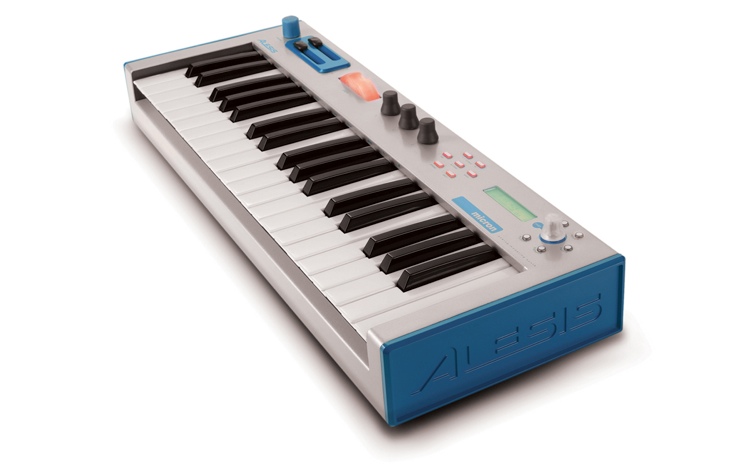
Fast forward.  Tonight, I was playing around on the Micron, in my continuing effort to know my synths better.  Going over the preset sounds again, I started to tweak a few, thinking about which ones might be useful on Retro Grade.  In doing so, I was playing little riffs on the key board.  When I got to a certain sound (I think it was "closet bass" whatever that means), I really liked the phrase I was playing and knew I had to record it before I forgot it (I'm still unable to write my ideas down in standard musical notation).  But I needed a drum track to go with the bass line, and thought of the rhythm track I'd been working on using the Monotribe.  I turned that on, got it going and played the bassline.  A marriage made in heaven.  They complimented each other so perfectly, and sounded so 80s, despite the fact that the instruments were decades too late for the party.  With only a little effort, I laid down the rhythm track for Tape 2 and felt like the project was really on it's way, the sophomore effort having been launched and sounding really good so far.  IMHO.

Friday, June 8, 2012

Analog Boy in a Digital World

I have finished recording my first analog tape track in over a decade.  I have even posted an early mix if you are interested:


I have learned so much, doing this project and I am committed to doing at least a few more analog tape songs.

Ihave previously mentioned how much more planning one needs to do, working with tape than with a digital audio work station.  In fact, one of the things I'm least happy with, regarding this song, relates to a lack of planing:


Listening, you will note that the glockenspiel, once it comes in, continues to play, without rest, until the song is complete.  I did not plan that.  It's a result of how it was recorded.   You may also notice that the glockenspiel shifts from the right side to the left side and back again.  Each shift represents and different performance, which will be made clearer when I post video of the making of this song.  As I recorded, I felt like I took many rests on the glockenspiel, but as a listener, it sounds like it plays continuously, because the different performances are all playing at the same time and the breaks were arranged to give it a continuous sound, I just didn't intend it to be so continuous.  So, you might ask, why not fix it now?  Well, except to fix it in the mix, as they say, there is nothing I can do, because all the synthesizer parts are on the same tracks as the glockenspiel (not including the bass synth, which is on the same track as the drums).  This is very hard to describe in writing.  I hope it is clear.

Another thing I noticed, recording the vocals:  I forgot how frustrating it is to wait for tape to rewind.  It's a short song, but it takes almost a minute for the tape to rewind each time.  I made many fatal mistakes when I was recording the vocals, and my hand just got into the old habit of hitting "stop" then "rewind" instantly, as the mistake occurred.  The rewind delay was like a punishment for bad behavior, and really motivated me to "get it right".  Twice, I thought it was "good enough", only to listen on playback and hear something terrible.  That was crushing, to think it's done and realize it's not even close.  I stopped getting excited when I thought I had a good take, and just practiced patience.  I tried to use the rewind time to take deep breaths and collect myself, but not my thoughts.


I don't know if you heard the thing I heard recently (probably on This American Life) about slumps, where great athletes and performers suddenly start to suck, and once they suck have the hardest time getting good again.  What's interesting is the relationship of slumps to thinking.  Psychologists believe these people can't get out of their slumps because they can't figure out how to turn their brain off, how to stop thinking.  This seems so counter intuitive, on its face, but actually confirms something I've long, long, long believed.

I first took up golf in 1995.  I should also mention, I haven't played it since 1997.  What blew me away about the game, aside from the fact that it's got this huge proportional curiosity about it (a giant field with a tiny goal), was the only way I could play, was to clear my mind.  If I thought for even a second about hitting the ball, I would miss it.  If I thought about hitting the ball hard, I would miss it more spectacularly.  The only way to hit the ball was look right at it, but stare past it and erase all conscious thought from my head.  It was so Zen-like.  I instantly understood why it was so popular.  It's better than alcohol for making the worlds problems go away, never mind that one often drinks during or after play.


What was interesting to learn on This American Life was that the same holds true for Pitchers in Baseball and many other high performance physical tasks.  If our brains start working, our performance suffers.  Try to remember that the next time you see a post-game locker room interview.  I always felt there was a huge amount of truisms and nonsensical BS in those conversations.  I'm more sure of it now.  If the athlete is doing their job, they shouldn't really be able to describe how they were able to achieve or miss their goal.  Asking them to do so is really an insult.  However, it's expected behavior, so most of them acquiesce, lest they appear rude or arrogant.  It's a dance that I have a very hard time watching without cringing.  But I digress.

As a musician, I find my golf strategy serves me well.  The more clear my mind is, the better I perform.  Of course, doing things this way, I may be closing myself off to emotional nuance that more seasoned performers (ie: people who know what the hell they are doing) are able to evoke.  But, anytime I think about my performance while I'm doing it, the whole thing falls apart.  Like thinking about fingering and strumming a guitar simultaneously.  As soon as I allow the idea in my mind, I can't do it.  I can only do it by ignoring what I am doing.


One could say that the analog tape is actually making me a better performer on more levels than one.  I have to perform entire songs without mistakes and I have to maintain my clarity even as the tape rewinds, which would be the easiest time to "leave the zone", if I let it happen.  Working in digital, you don't get the chance to "leave the zone" because you can keep recording, even after you make mistakes.  A fact I've often used that to my advantage.  The best part of my performance is usually in the middle of the song (I have inertial anxiety, I get nervous at the beginning and the end of the song).  So, in a digital environment, I often record the lyrics out of order and combine different takes for the final cut.  I'll put each part of the song (beginning, middle and end) in the middle and use a series of "middle takes".  It's not remotely possible with analog.

to be continued . . .

P.S. If you haven't already, consider subscribing to this blog using the subscription tool on the right, then you will never miss any of these tremendously exciting posts.

Friday, June 1, 2012

Why Tape?

I was talking with one of my co-workers the other day, a younger guy who may have missed the days of cassettes and I was telling him about the retro project (see previous posts, like here).  I told him I'd forgotten how difficult it was to work with tape and he asked the very logical question, "then why do it?"

Even as I've been reveling in the sound of analog audio, it's been in the back of my mind that no one is going to hear the difference.  In fact, I'm sure a lot of people will be turned off by the hiss of the tape itself in the background.


I was talking to another friend, who's getting her masters in Electronic Media, someone infinitely more plugged in than I am, and she was lamenting the loss of film in movies.  She could see why digital would be preferred for blockbusters, since it's so much cheaper and convenient to shoot, but wondered why it was losing ground on art films as well.  She had actually been having the same conversation with her professor at school, days earlier and he told her it just wasn't economical anymore.  And she said, "but it looks so much better"  But he was ready for that too, "Young people can't see the difference, like you or I can.  To them it doesn't matter."


I remember when DVD and MP3 first landed in the late 90s.  I was slow to adopt each.  People kept raving about the higher quality of DVD over VHS.  But even expensive machines back then had serious artifacting issues, which annoyed me.  I preferred the analog noise of VHS to the digital compression issues of DVD.  Same with MP3, it sounded like someone sucked the life out of the recording, though it was hard to put ones finger on what had changed.  MP4/AAC was such a relief when it came along.  But I digress.

Now with the prevalence of flash video, especially from YouTube, much of which is awful quality, DVD and MP3 seem like super high fidelity formats.  Which is ironic to the core.  But if YouTube is what you're used to, you really will have trouble seeing the quality difference between HD video and Film, they're both going to look so spectacular you'd be hard pressed to identify one being better.  But I'm not here to complain about young people.  I'd happy join their ranks if it weren't a quantum impossibility.

Why work on tape?

It's unforgiving.  It has quality issues (hiss).  It has severe limitations (very limited numbers of tracks and dynamic range).


There were two important thrusts in my education:

• critique (and self critique)
• process

Both are about making your work better.  The second is also about overcoming creative blocks.

The thing about tape is it radically alters my process for making music.  It throws so many wrenches at me I often feel I will fail before I even start.  It's a hurdle, to get up the courage to even lay down an analog track.  So much can go wrong (and does), and as I've mentioned before, each additional take diminishes the sound quality slightly.  When I record on the computer I have the most lackadaisical attitude to the process, and I record anywhere I have my laptop, train, car, park, etc.  If I make a mistake, I keep playing and edit it out later.  Not so at all with tape.  I rehearse, get comfortable, and leap into the abyss.  Often I lose my way out of nervousness and have to repeat the process.

Additionally, I usually try to play more than one instrument at a time, to maximize my 4 limited tracks.  I would never bother to do that on the computer, where I have limitless tracks.  I also have to plan what is going to go on each of my 4 tracks and how I eventually plan to mix them together (something that needs to be center mixed cannot be recorded on the same track as something that needs to be panned right or left).  On the computer I don't even think about the mix when I'm recording.

All these little things change the process dramatically, and by changing the process, you change the music.

Will it be good?  Who knows.

But it will still sound like Tribrix.  Regardless of what process I use, at the end of everyday I cannot be someone else, I'm forced to be me.  I can evolve and change over time, but my DNA is always the same (transcription errors not-with-standing).  We can't help but be who we are, even if we try to be someone else.  But changing our process, our routine, our geography, anything significant will awaken something new in us and take us down a different path.  That is why one works on tape.


Thursday, May 17, 2012

Editing

I think it was in the first month of my freshman year of college that I first heard "Less is more" in a creative context.  But I'm usually a "more is more" kind of artist, especially when it comes to music.


It's like I think adding a few more tracks (instruments) will hide my weak performance on some earlier recorded track.  Sometimes that works.  Sometimes two shoddy performances of the same thing smooth the blemishes of each since you rarely make the same mistake twice.  I'll be the first to admit, I'm not the greatest musician from a performance perspective.  In fact, I have turned in some really weak performances in some of my recordings.  I didn't hear it at the time, but I certainly hear it now.

More than half my life I've longed for a good editor.  Someone who will tell me when I'm fucking up my creative endeavors, and help put me back on the "right" path.  I usually crave my editor most in the areas where I am weaker, writing and music making.

I remember finishing my first lengthy script and asking my coworker, Heather, to edit it for me.  She was an English Major, bright and witty in person.  She agreed and read my script.  She corrected some minor mistakes here and there, but, sadly, there was really only one part she felt could be improved:

I had a scene with a homeless man and a detective.  The homeless man had a stainless steel bowl under his hat, a fact I revealed early in the scene.  She suggested saving that for the end of the scene, allowing the detective to believe he was getting valuable information, only to discover later that he was talking to a crazy person.


Heather's suggestion was hilarious, and never failed to get a laugh when people saw the finished movie.  Unfortunately, Heather was a senior and moved away after graduation.  And I've only rarely been lucky enough to find a comparable editor in the years since.

Which means, I usually have to self edit, which sucks but brings me to the point of this post.


If you have ever watched the "Classic Albums" episode about Rumours, the seminal Fleetwood Mac album, there's a single line I really like in the episode, relating to music production.  "We build it up, and tear it down."  Talking about how a lot of the songs on the album had lots of unused instruments tracks, recorded and abandoned in the final mix.

As I'm laying down tracks for the Retro Project (previously mentioned here), I'm kind of going through a similar process, but in a totally backwards way.  Four track cassette recorders were designed as musical sketch pads for artists to develop ideas cheaply, at home, before going into the studio.  Though some artists, like Bruce Springsteen, recorded his album, Nebraska entirely on a cassette 4 track.  But what I am doing is using professional grade software, in this case, Logic, to sketch my the song for my retro project, which I will eventually record on a cassette 4 track, in a sense, not using it at all for its intended purpose.

You might ask what all this has to do with editing.

Well, I'm trying to plan out what I will eventually put on each of my limited 4 tracks.  At most I can get 2 or 3 instruments on each track, if I can play them simultaneously.  Some tracks will have only 1 instrument.  So, at the moment, I building it up to tear it down.  I have already laid down 9 individual instrument tracks of drums and synthesizers, trying to figure out where each one could go in the final recording and mix when I get to the 4 track.  A wonderful benefit of only having 4 tracks is that I had to edit and remove some of the stuff already, and each time I did it, the song got better.  So the 4 track has become an editor to rival Heather in my mind.  It's forcing me to acknowledge "less is more" and forcing me to be a better musician.  I don't have two tracks to smooth a crappy performance.  I just have to deliver a good performance, every time.  As a result, I can say, this retro project is going to be my roughest in years, not nearly the level of polish I'm accustomed to, but it will be much more honest, and I hope, in the end, better all around.


Wednesday, May 9, 2012

The Retro Project

A long time ago, between 2005 and 2007, when I was starting to make music again after a long hiatus, I thought it might be fun to do a song (or two) only using instruments I had back in the late 80s.  At the time, I actually had to re-aquire some of them, like a Synsonics drum set:


http://www.burnkit2600.com/synsonics-drums/


After a little poking around the web, I abandoned my idea.  Here's why.  What I was planning to do was to use only vintage gear to make a song using a modern DAW (digital audio workstation), but what I discovered were people going much more extreme than what I was planning, making my effort seem pale and moot.


What I did do, though, was use some of those old instruments to add flavor to my "modern" recordings.  Flash forward: last week.


Last week I was surfing around, reading tutorials about creating complex bass synthesizer sounds.  It's something I've been working on for a few weeks.  Trying to create "live" playable versions of popular contemporary bass timbres.  But I stumbled on something very interesting, to me and I wish I had a link to share (see comments when I find it), but someone had rediscovered their cassette 4-track recorder in their attic, and decided to make a recording with it, and had posted said recording on soundcloud.


I was so curious to hear this track, and I was so happy to hear a modern recording done with something so completely obsolete.  I didn't imagine I'd ever follow in that guys footsteps . . . but,


I had also recently dug out my own 4-track (see above) because someone who once performed in a video of mine asked to see the finished video.  Nothing sexual, but the video wound up being a little to personal to post on the web, so no link, but I digress.  I had long ago lost the finished edit of the video, so the only way to share it with my friend was to make a new master.  I located the edited video and then set about marrying it to the 4-track audio tape containing the music and narration.  So my 4-track has been set up in my studio for months.  But that alone didn't get me interested in actually using it to make music.  Perish the thought.  What a pain it would be, to use that old thing to record a song, to say nothing of the crappy quality of the output.  Read on,


I could not get that guy's retro track out of my head.  It was so cool to hear the sound of tape again, the kind of warm smooth sound digital can only aspire to, with its crisp precision and perfect replication.  I started to think, it might be interesting to try and record something with the 4-track, just to break the monotony of the way I normally make music now.  But then I remembered all the trouble my 4-track was having when I stopped using it.  The erase heads don't work as well as when they were new (meaning, you can't fix mistakes you might make while playing), and how the machine will not stay in record mode without some strong packing tape.


I then remembered, the last time I checked, you could buy a new cassette 4-track for about $80, so maybe I should just replace mine, if I was serious.  However, a little sleuthing clued me in to the fact that production of these machines ceased several years ago, and the price, has, of course, gone way up as a result.  The cheapest "new" one is now about $240, best I can tell.  Way out of my budget for something I may use only once or twice.


However, I became kind of obsessed with seeing if I could find one cheaper and wound up discovering a lot of people who, beyond being nostalgic for these old devices, were actually waxing about the benefits of using them, today:


http://yearoftheboy.com/2011/04/03/4-track-cassette-recording-a-few-thoughts-on-why-older-recording-techniques-are-sometimes-better/


I started reading more and more about analog 4-track recording, it's history, demise, all the while, thinking, I really want to give this a go, at some point, feeling like I was just getting the dominoes lined up for some future knock down show.  Until I found this:


I am attempting to create a compilation of like-mi...


Simon Holland (a.k.a. Carrillion) is creating a compilation audio project of music recorded on or using the techniques and instruments of old cassette tape 4-track recording, with a single rule, no guitars.  Now this is a little different than anything I'd been contemplating before, as my retro track plans always included a spot for some guitar.  But I'm totally up for this challenge and it changed my future looking into present action.


As such, last night I dug out both my old casio keyboards, a VL-1 and Casio MT-540.  I had an idea to lay down a click track using the built in rhythms of the VL-1. If you are familiar with the Trio song: Da Da Da:


Trio - Da Da Da


You already know how the drums on this little synth sound.  Here's what it looks like:


I connected the VL-1 to an old delay unit from Roland/Boss and started to created the feel I was looking for.  I ended up adding a flanger to the loop too, to give the synth sound a little more dimension.  I also had an idea for a "sequence" type melody.

Recently I've been trying to get a handle on being able to actually play all my instruments, especially the synths.  I was recently working with my Korg Kaossilator:


And noticed it was set to "Ionic" scale.  I was not familiar with "Ionic" scales, so I consulted my friend, wikipedia and wound up also looking up pentatonic scales, which I had heard of before but never bothered to learn more about.  On reading about pentatonic scales, I thought they would be very useful for a novice like myself, because it's very hard to get discordant in that mode.  

After coming up with a nice sequence melody.  I set about making a good bass timbre.  Remember, learning how to make cool bass timbres was how I wound up going on this whole retro journey in the first place.  I took the Casio MT-540:


Blended the Brass Ensemble (an old favorite) with the Funky Clav sounds but ran it through my old Roland Boss Octaver, which creates bass sounds one octave lower than what you put in, and the sound was fat and rich.  Now, I have no idea what the eventual bass line of the song will be, but that timbre is going to be great.

I have yet to decide on a voice for the main melody, but there will be additional drums provided by the Synsonics (and maybe a 'real' tambourine).  And I started to develop some lyrics, though, given the retro nature of the project, I'm tempted to grab some of my old poetry instead, and edit it to fit the song.  Time will tell.